









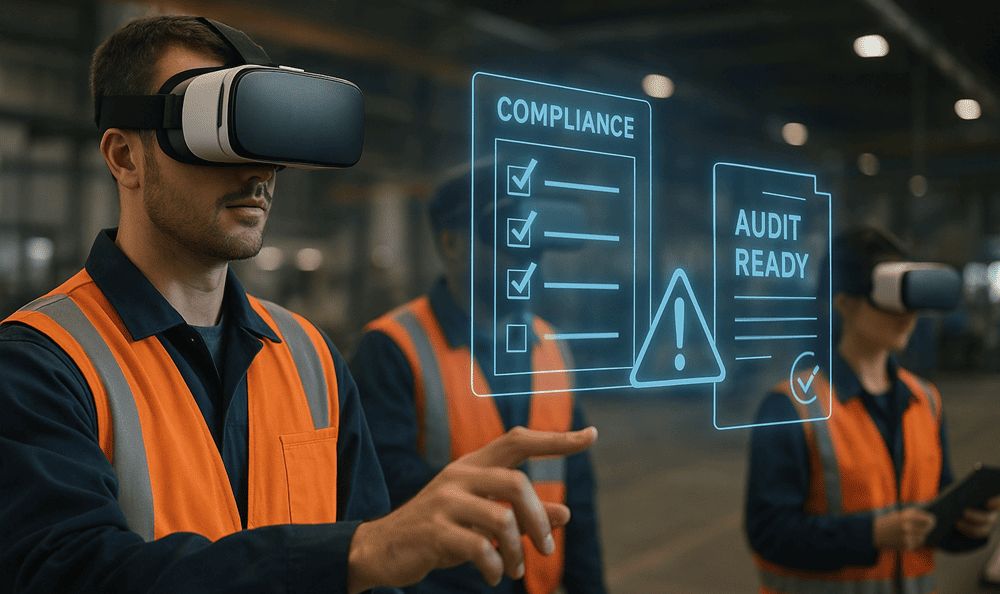
Occupational safety training remains one of the key tools for reducing workplace risks. However, in practice, many companies face the same problem: employees attend safety briefings, sign the required documents, but are not always able to correctly apply the acquired knowledge in real-life situations.
This is especially critical in manufacturing environments, where a single employee mistake can lead to injuries, equipment damage, production line downtime, or significant financial losses.
At the same time, practicing fires, emergency shutdowns, or other hazardous scenarios directly in a production environment is difficult, expensive, or simply impossible.
That is why more and more enterprises are implementing VR simulators for occupational safety. They make it possible to create realistic training scenarios and develop critical skills without risking people, equipment, or production processes.
Why Traditional Occupational Safety Training Often Fails
Traditional training is usually based on lectures, presentations, printed instructions, and testing. While this approach is necessary for delivering basic knowledge, it often fails to develop practical skills.
“Listened and Forgot”
Most employees are exposed to large amounts of information during safety briefings. A significant portion of this information is quickly forgotten, especially when it is not applied in practice.
Emergency Scenarios Cannot Be Practiced in Reality
A fire, hazardous material leak, equipment failure, or emergency production line shutdown are situations that are difficult to recreate in real-world conditions without putting the enterprise at risk.
As a result, employees understand the procedures theoretically but lack practical experience in carrying them out.
The High Cost of Mistakes
In modern industrial environments, a single mistake can lead to serious consequences:
- employee injuries;
- damage to expensive equipment;
- disruption of production processes;
- production downtime;
- financial losses and reputational risks.
Different Levels of Employee Preparedness
New hires, contractors, and experienced operators often have different levels of knowledge and practical skills. This makes it difficult to maintain a consistent training standard across the entire workforce.
How VR Simulators Solve the Training Challenge
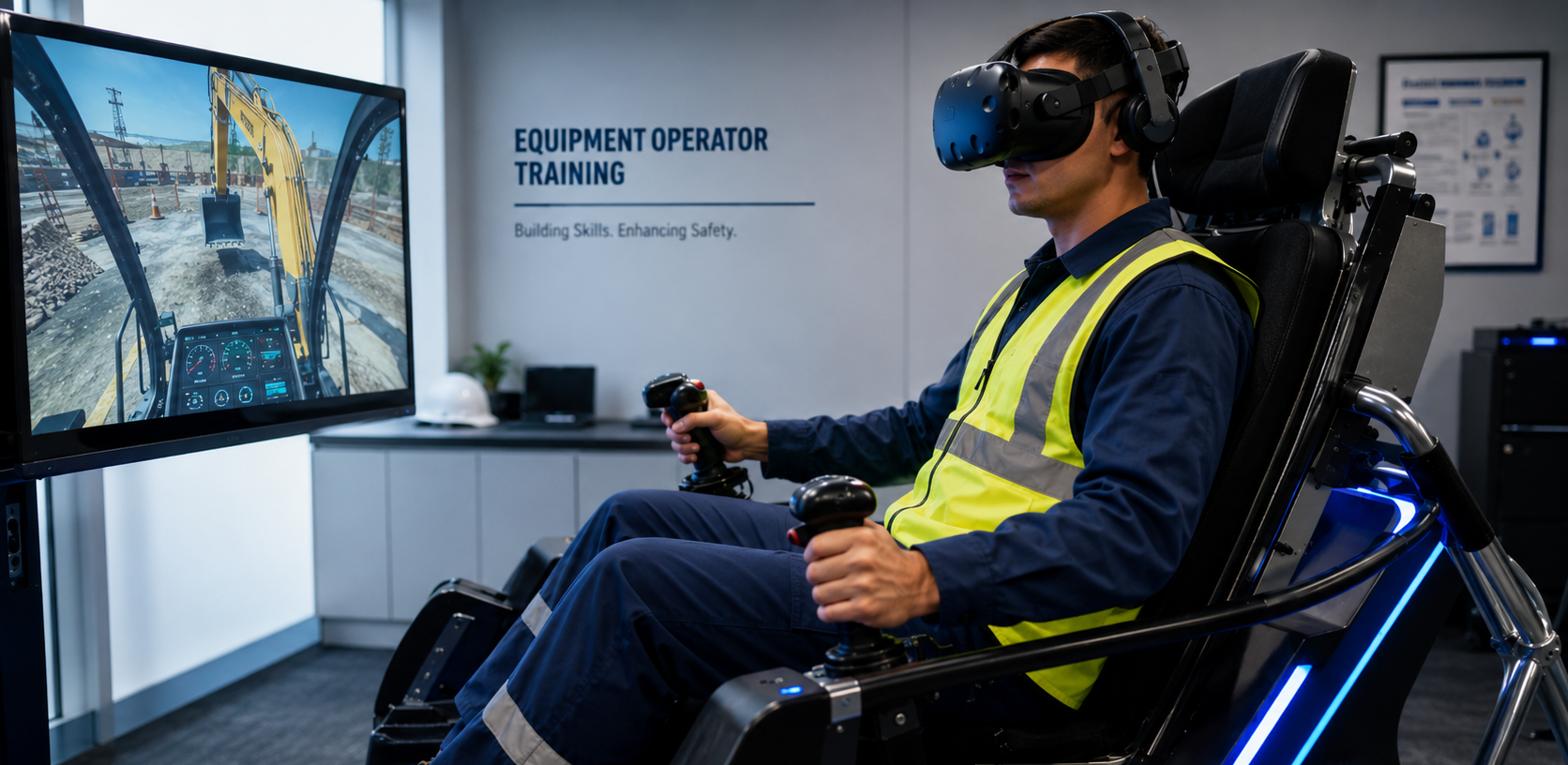
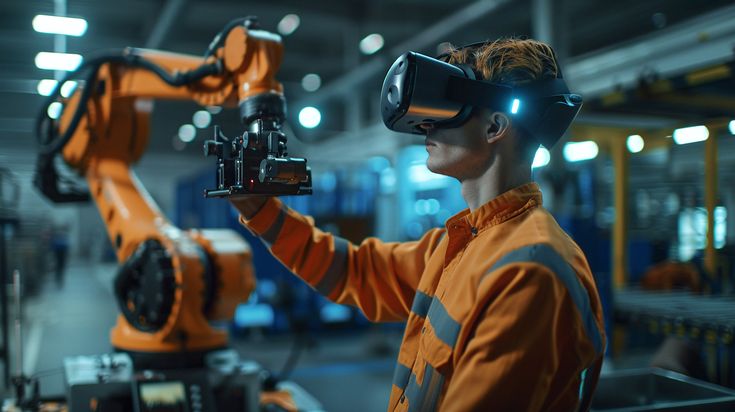
A VR simulator places employees inside a virtual 3D environment that closely replicates the real production setting. Users interact with equipment, tools, and the surrounding environment as if they were physically present on site.
Learning Through Practice
Instead of simply reading instructions, employees perform specific actions within the virtual environment. This approach helps develop correct skills faster and improves retention of operational procedures.
A Safe Environment for High-Risk Scenarios
Creating a VR environment makes it possible to simulate scenarios that would be dangerous or impossible to recreate in real life. Employees can make mistakes and observe their consequences without posing any actual threat to themselves or the production facility.
Unlimited Scenario Repetition
Any scenario can be repeated as many times as necessary until the skill is fully mastered. This is particularly valuable for emergency procedures that occur rarely in real life but require flawless execution.
Standardized Training
All employees go through the same training scenarios regardless of shift, location, or instructor. This ensures consistent safety standards across the organization.
Error Tracking and Analytics
Modern VR solutions record every user action, including:
- skipped steps;
- incorrect operational sequences;
- safety violations;
- task completion times.
Based on this data, HSE specialists can assess workforce readiness and improve training programs.
Proven Business Results
According to international studies and corporate training practices, VR simulators deliver measurable outcomes:
- training time reduced by up to 4 times;
- training costs reduced by 40–60%;
- 3–4 times higher learner engagement;
- employee confidence increased by up to 215%;
- reduction in errors by up to 50%.
This is why VR is increasingly viewed not as an experimental technology but as a practical tool for managing operational risks.
What Occupational Safety Scenarios Can Be Implemented in VR
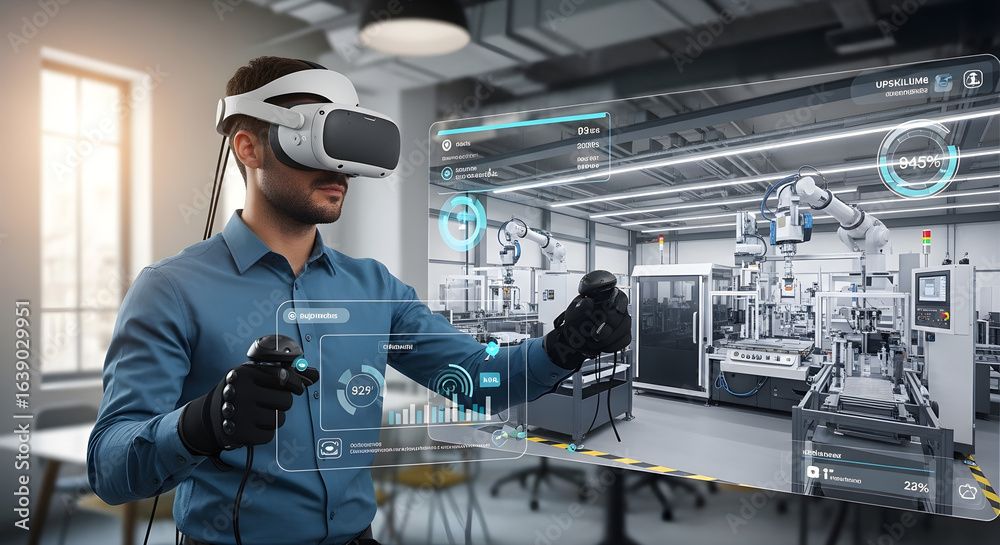
A modern VR simulator can recreate a wide range of industrial processes and hazardous situations. This is achieved through detailed 3D models of equipment, process animations, interactive components, and immersive training scenarios.
1. LOTO (Lockout/Tagout)
One of the most common applications is training employees in safe energy isolation procedures before performing maintenance or repair work.
Employees complete each step of the procedure, while the system monitors their actions and identifies potentially dangerous mistakes.
2. Emergency Scenarios
VR can be used to simulate:
- fires;
- hazardous material leaks;
- explosive situations;
- emergency equipment shutdowns;
- failures of critical systems.
Such training helps employees develop the correct response before a real emergency occurs.
3. Evacuation Training
Employees can practice evacuation routes, locating safe exits, and coordinating with team members under conditions of limited visibility or high stress.
4. Hazardous Production Areas
VR enables safe training in high-risk environments, including:
- areas near moving machinery;
- working at height;
- confined spaces;
- explosive atmospheres;
- high-voltage environments.
5. Training on Complex Equipment
Sophisticated and expensive equipment often requires extensive training. With VR, employees can practice procedures without the risk of damaging machinery or disrupting production.
The training process can incorporate digital templates, instructional overlays, interactive guidance, and other tools that simplify learning and improve retention.
Which Industries Benefit Most from VR Safety Training
VR training is effective across a wide range of industries where workforce safety directly impacts business performance.
The greatest benefits are typically seen in:
- FMCG manufacturing;
- food production;
- automated warehouses;
- logistics centers;
- facilities with complex equipment;
- mechanical engineering;
- highly automated manufacturing plants.
In every case, the training environment is designed according to the specific characteristics of the facility, equipment, processes, and safety requirements.
Depending on project objectives, organizations may use different platforms, VR devices, programming tools, and specialized visualization technologies. Together, these elements help create highly realistic and engaging training experiences.
Modern occupational safety requires more than simply transferring knowledge—it requires developing practical skills.
VR simulators for occupational safety allow organizations to safely train employees for critical operational scenarios, reduce errors, improve readiness for non-standard situations, and lower training costs.
For enterprises, this is an opportunity to move beyond formal safety briefings and provide hands-on practice for real-world situations—without risking people, equipment, or production continuity.
Consultation on a VR Solution for Your Production Environment
If you are considering implementing VR-based occupational safety training, contact us for a consultation. We will help assess your production processes, identify the most critical safety scenarios, and develop a VR simulator tailored to the specific needs of your organization.