









The Business Goal Matters More Than the Technology
Modern companies increasingly need to present their manufacturing facilities, offices, real estate properties, showrooms, or technological processes without an in-person meeting. Photos and conventional promotional videos do not always convey the scale, atmosphere, or unique characteristics of a space. That is why businesses use 3D tours, 360° videos, VR tours, panoramic photography, and other virtual presentation formats.
Each solution has its own advantages and is suitable for different business objectives. The right choice depends on what exactly needs to be presented: a space, a process, equipment, a product, or an entire facility.
What Is a Virtual Business Presentation?
A virtual business presentation is a digital way of showcasing a company, manufacturing facility, or product without requiring the viewer to be physically present. This type of content helps businesses conduct remote presentations, introduce partners to their facilities, showcase real estate properties, create virtual showrooms, and participate in international negotiations.
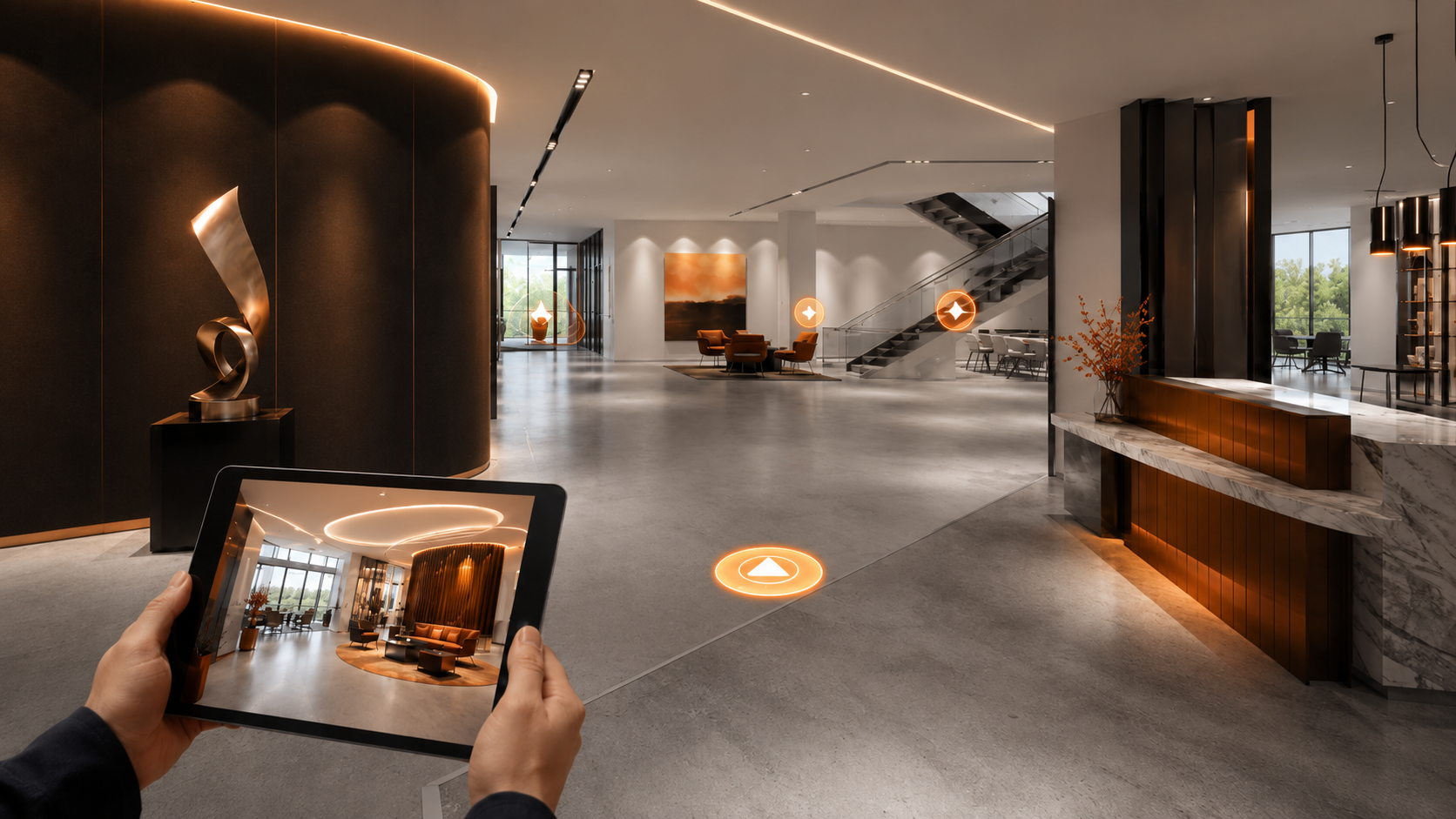
What Is a 3D Tour?
A 3D tour is an interactive walkthrough that allows users to move independently between different viewing points within a space. This format is widely used for offices, hotels, museums, residential complexes, retail stores, and showrooms.
Its main advantage is that visitors can explore the environment at their own pace. However, a 3D tour does not always effectively demonstrate moving people, operating equipment, or manufacturing processes, making it less suitable for dynamic presentations.
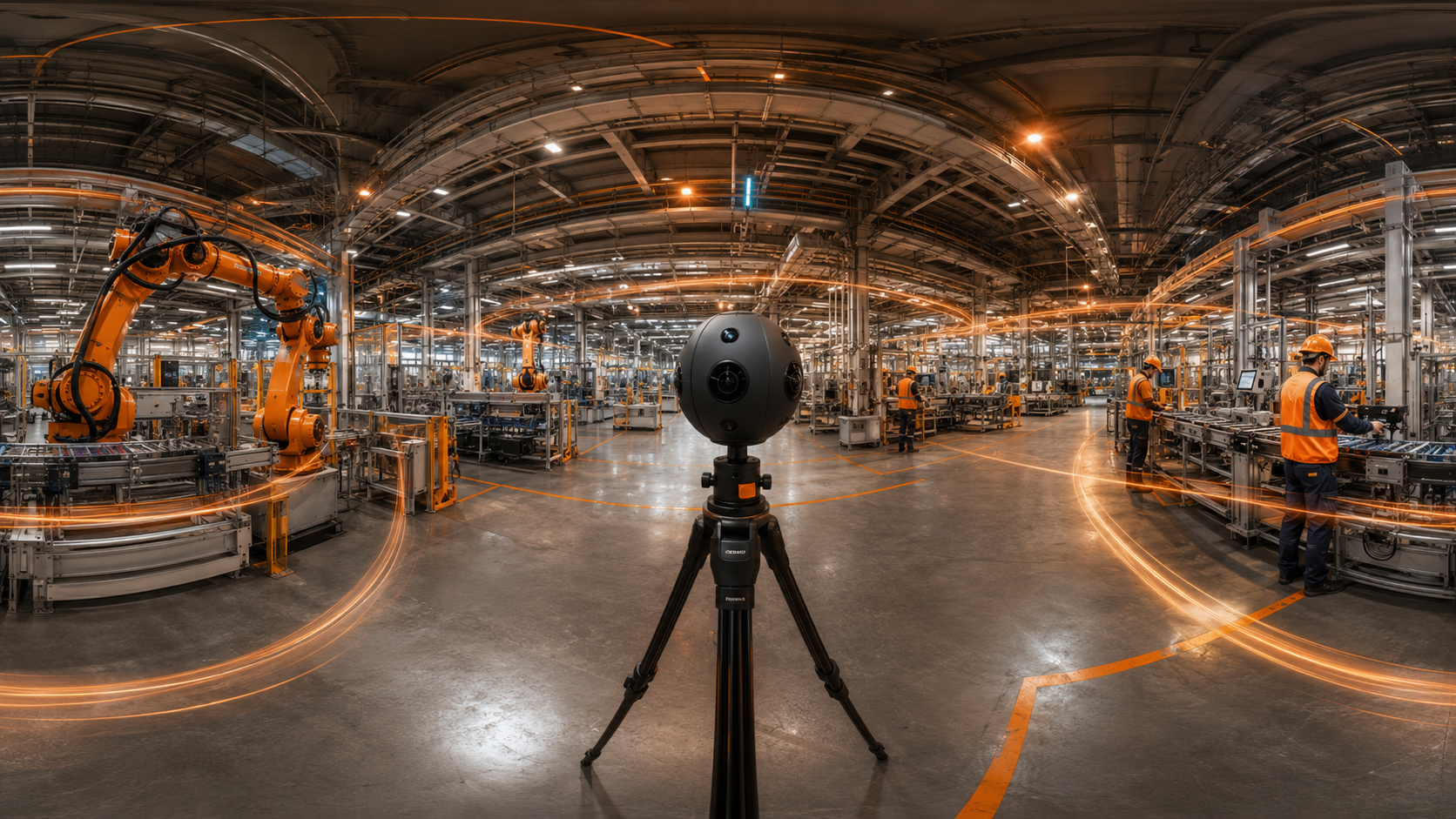
What Is a 360° Video?
A 360° video, also known as 360-degree video production, allows viewers to look around in every direction while watching the video. This creates a strong feeling of being present inside the actual environment.
This format is ideal for presenting manufacturing facilities, technological processes, company infrastructure, construction sites, exhibitions, and large-scale events. It not only shows the space itself but also demonstrates how everything works in real time.
360° videos can be used on a company website, in business presentations, on social media, on YouTube, or viewed through VR headsets.
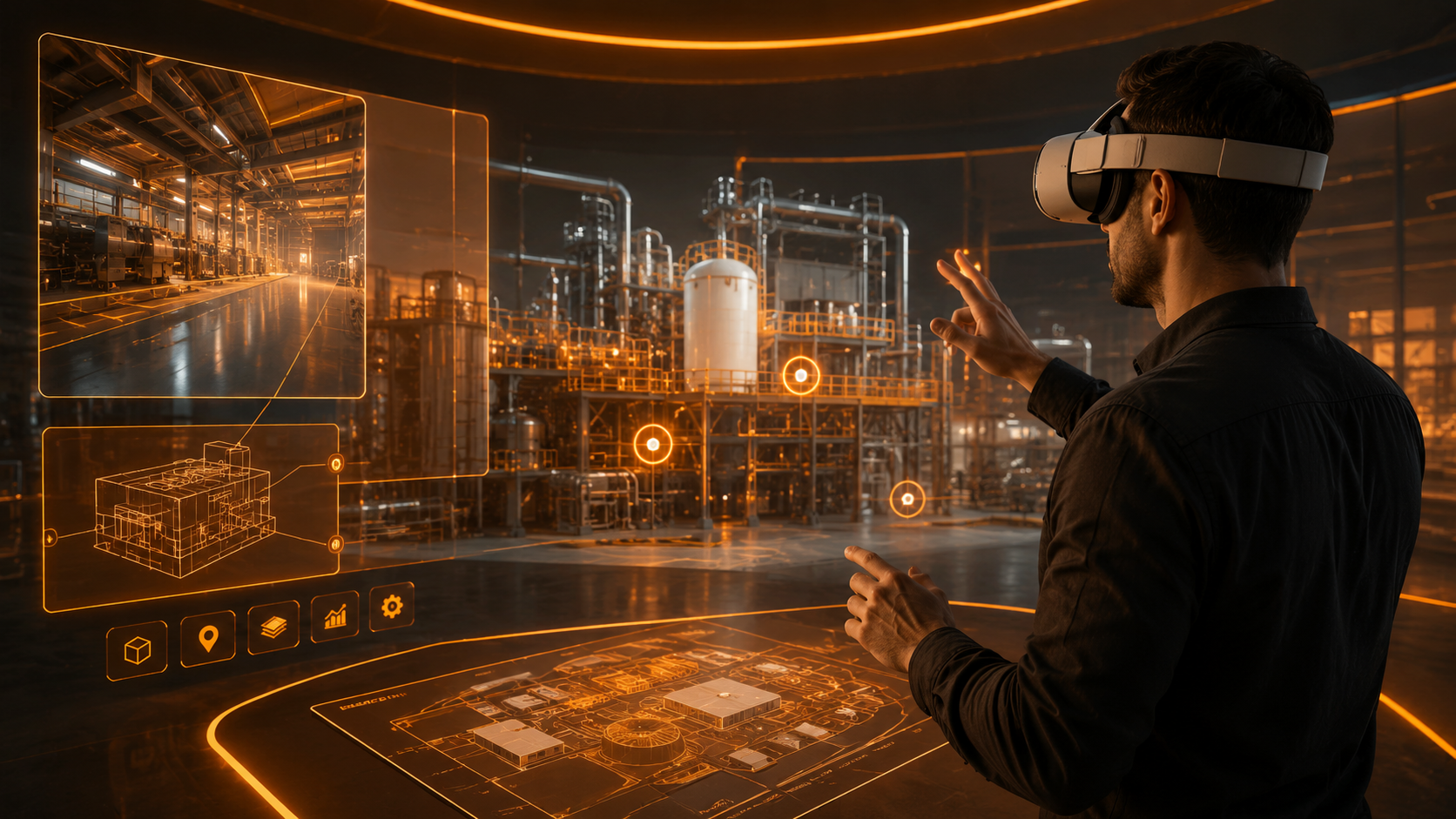
What Is a VR Tour?
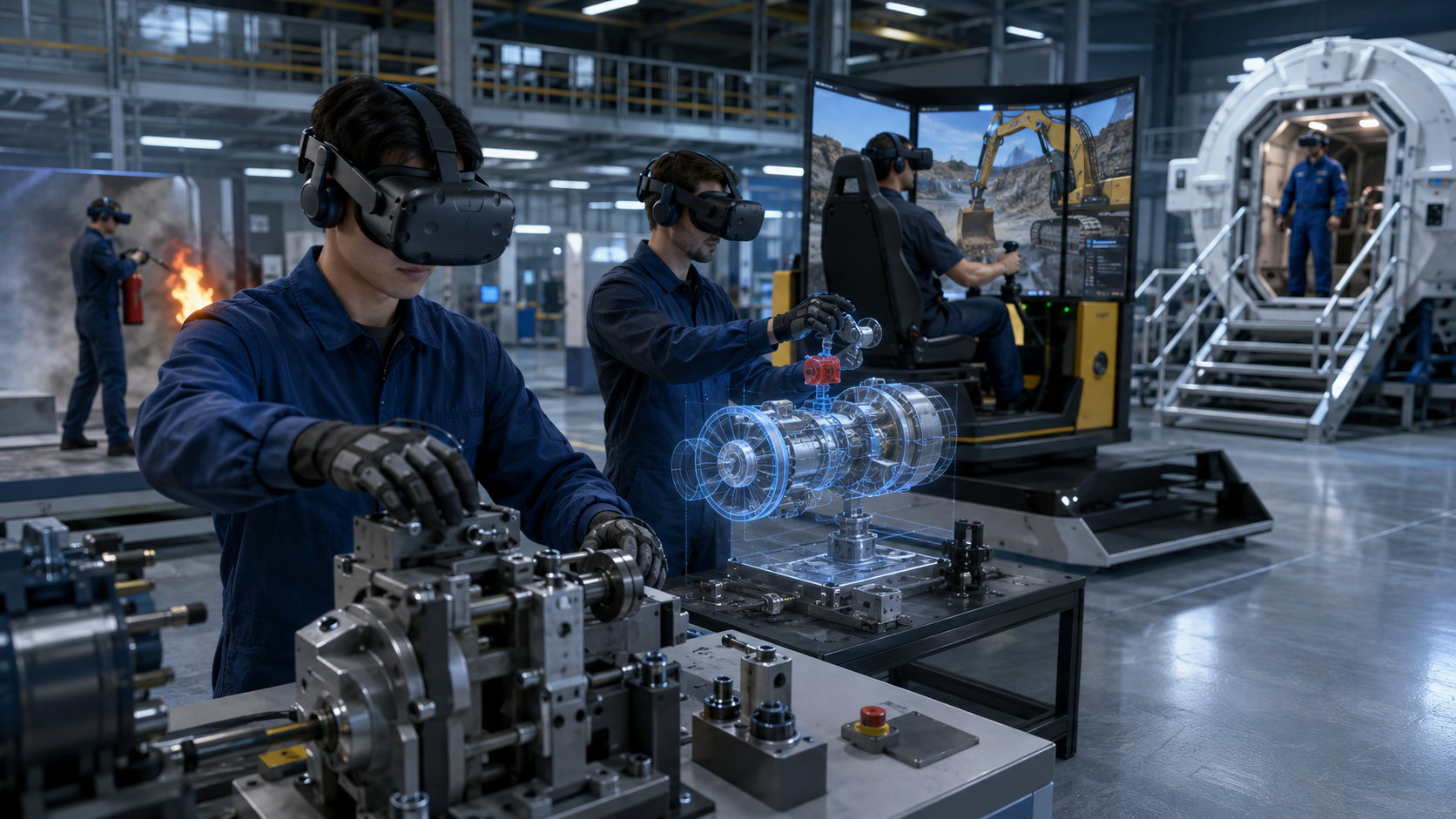
A VR tour combines the capabilities of 360° video, 3D rendering, interactive elements, and graphics. This format creates a deeper level of immersion and guides the viewer through a carefully designed scenario.
VR tours are often used to present complex industrial facilities, investment projects, technological solutions, large infrastructure sites, and virtual showrooms. Additional features such as annotations, diagrams, 3D models, infographics, and interactive elements can also be incorporated.
Which Format Should You Choose?
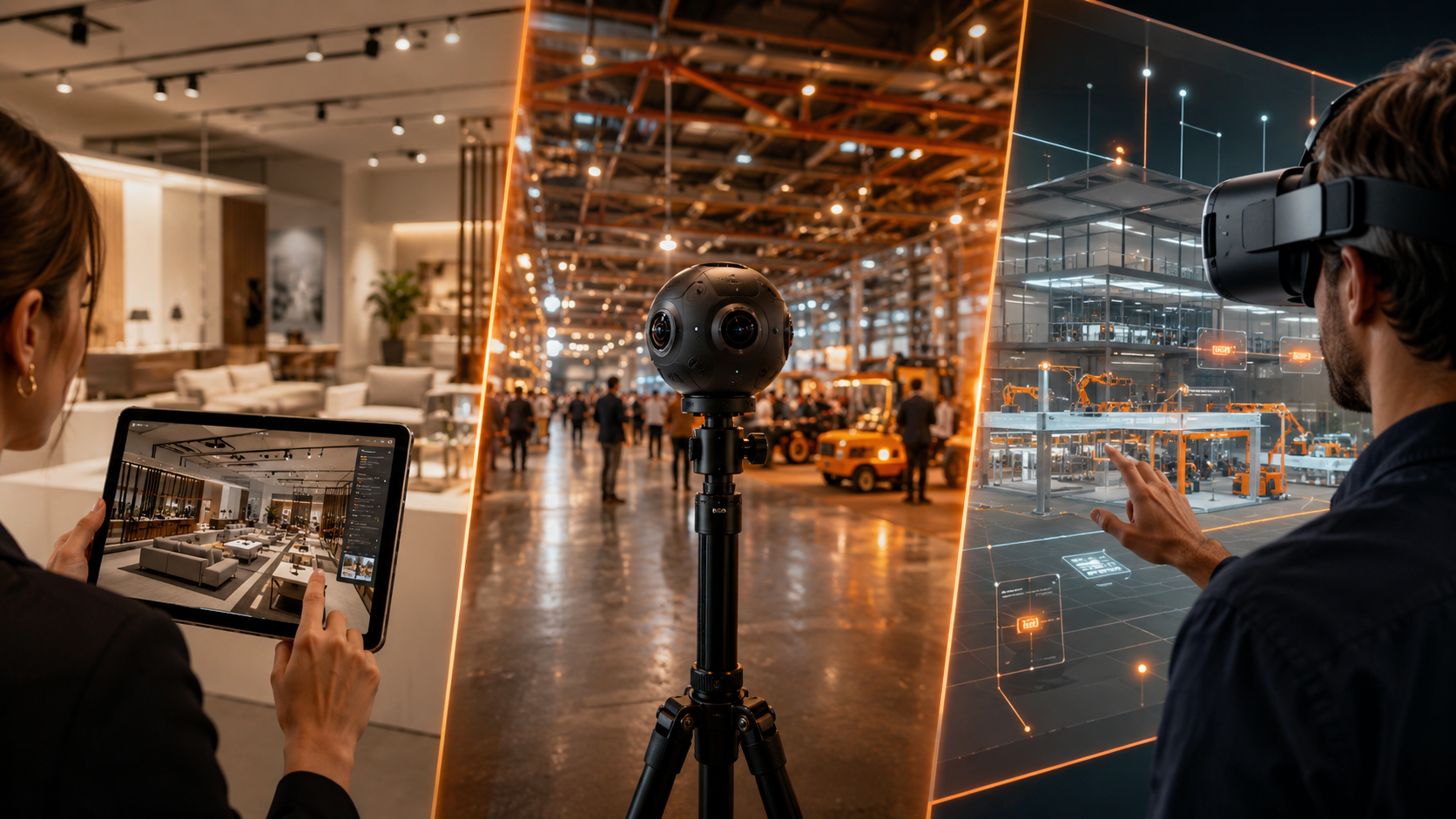
If your goal is to showcase an office, store, or apartment, a 3D tour or panoramic photography is usually the best solution.
If you need to demonstrate manufacturing operations, logistics, equipment, or technological processes, 360° video is a more suitable option.
When the objective is to make a strong impression on investors, partners, or clients and provide the most realistic viewing experience possible, a VR tour is the ideal choice
When Should You Choose 360° VR Video?
360° VR video is an effective solution if clients cannot visit your facility in person, you need to present your manufacturing operations to international partners, demonstrate a complex product, or reduce the need for on-site presentations.
This format helps communicate the scale of your business, showcase production capabilities, illustrate technological workflows, and create a stronger emotional connection with the audience.
Conclusion
There is no universal solution for every business need. A 3D tour is best suited for showcasing physical spaces, 360° video is ideal for demonstrating real environments and processes, while a VR tour provides the highest level of immersion and audience engagement.
If your company needs to present a manufacturing facility, property, infrastructure, or a complex product without requiring clients to visit in person, 360° VR video is worth considering. Learn more about this solution here: https://advin-global.com/solutions/vr-360-video/