









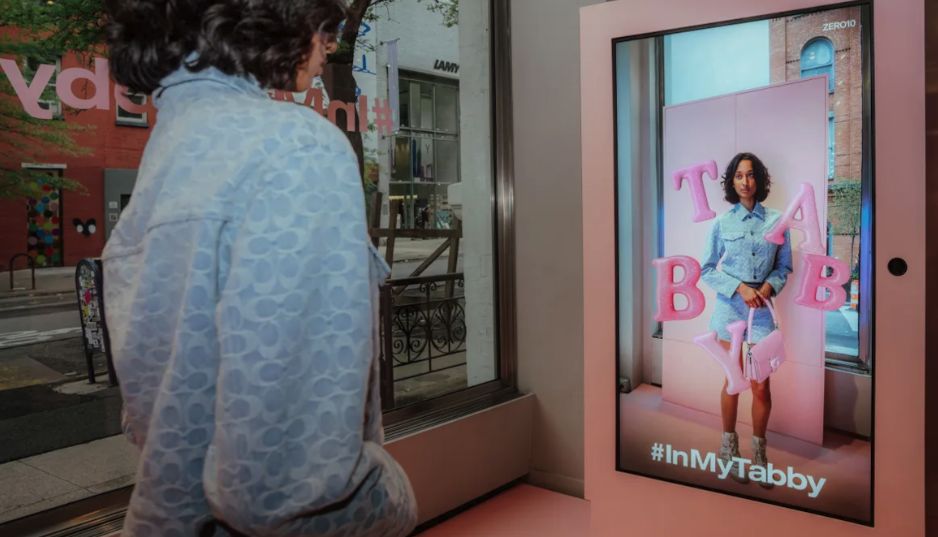
Modern event marketing is changing rapidly. Guests are no longer impressed by just a красивий photo zone or a branded stand, they expect interaction, personalization, and a wow effect. That is why AR mirror has become one of the most popular solutions for events of all sizes: from conferences and exhibitions to fashion events and shopping malls.
AR mirrors combine physical space with digital content, creating an interactive experience that is memorable and encourages guests to share it on social media. It is not just a screen with a camera, it is an innovative multimedia tool that overlays animations, graphics, masks, special effects, branded scenarios, and responds to user movements in real time.
In this article, we will review 5 use cases of ar mirror for events, including Ukrainian and global examples. You will see how augmented reality mirrors help brands attract audiences, create viral content, and strengthen emotional connections with guests.
Why AR Mirror for Events Has Become a Trend
Today, brands are looking for formats that do not just showcase a product but create an experience. That is why AR mirror for events is increasingly used at presentations, festivals, forums, and exhibitions.
Main advantages:
- interactive engagement format;
- photo and video content created by users themselves;
- fast sharing on social media;
- immersion and presence effect;
- lead collection via email, QR, or photo printing;
- adaptability for any brand.
Smart augmented reality mirrors can function as a photo zone, gamified activation, AI installation, information display, or personalization tool.
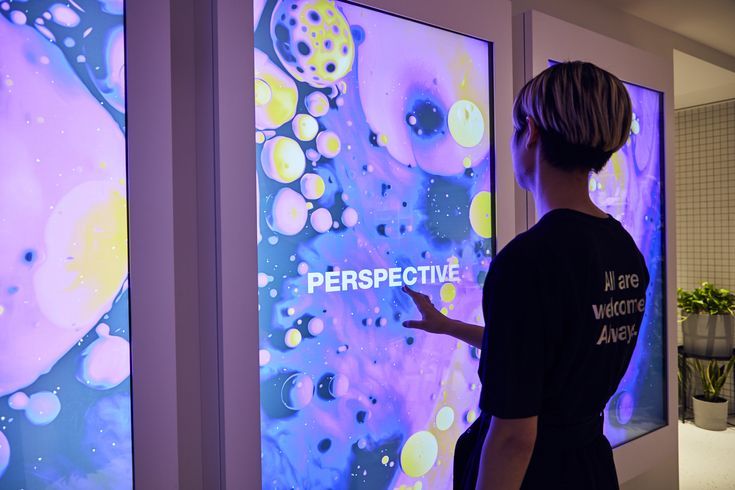
1. Ukrainian Fashion Week: AR Mirror by Visa & PrivatBank
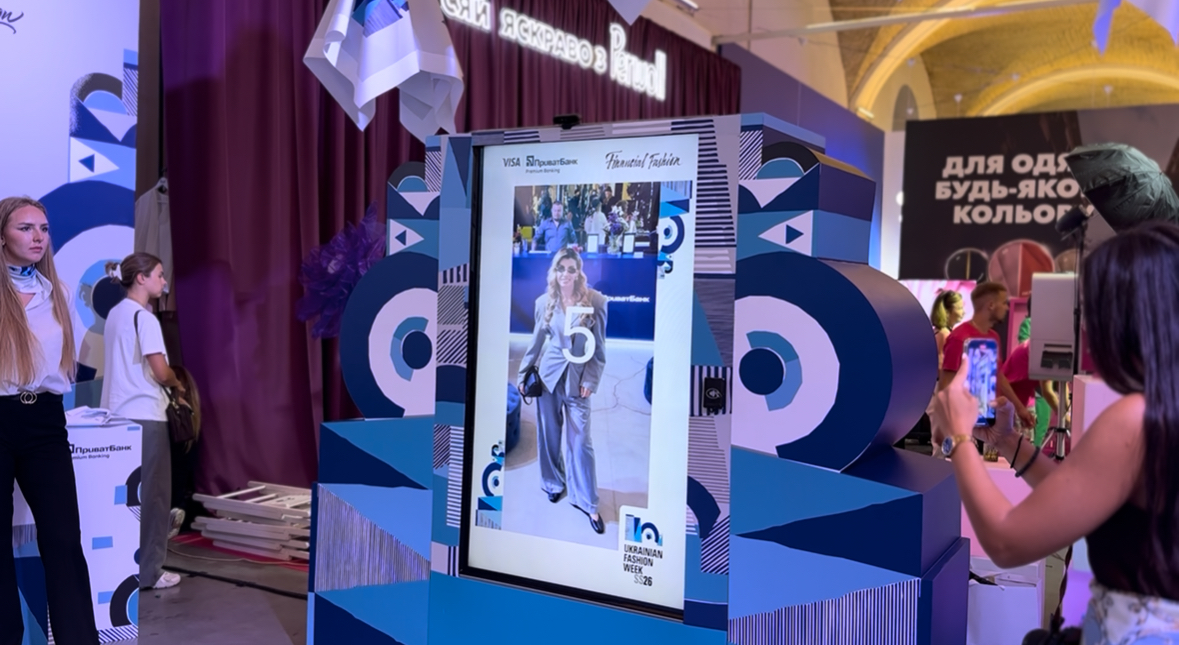
One of the brightest Ukrainian examples of using AR mirror was an interactive brand zone for Ukrainian Fashion Week, created for VISA and PrivatBank in 2025.
The goal was to combine art, technology, and the brand’s payment solutions in one space. The team delivered an innovative solution inspired by the legacy of Sonia Delaunay.
At the center of the installation was an AR mirror activated by tapping a Visa bank card. After activation, the system launched a personalized fashion scenario: users saw themselves in augmented reality with designer elements and then received a stylish postcard generated in real time.
The project included:
- AI-generated visuals;
- sensor technologies;
- interactive screen;
- postcard printing;
- digital fashion graphics;
- branded animations.
This case perfectly demonstrates how AR mirror for events can become the centerpiece of a brand zone and attract crowds eager to engage with the brand.
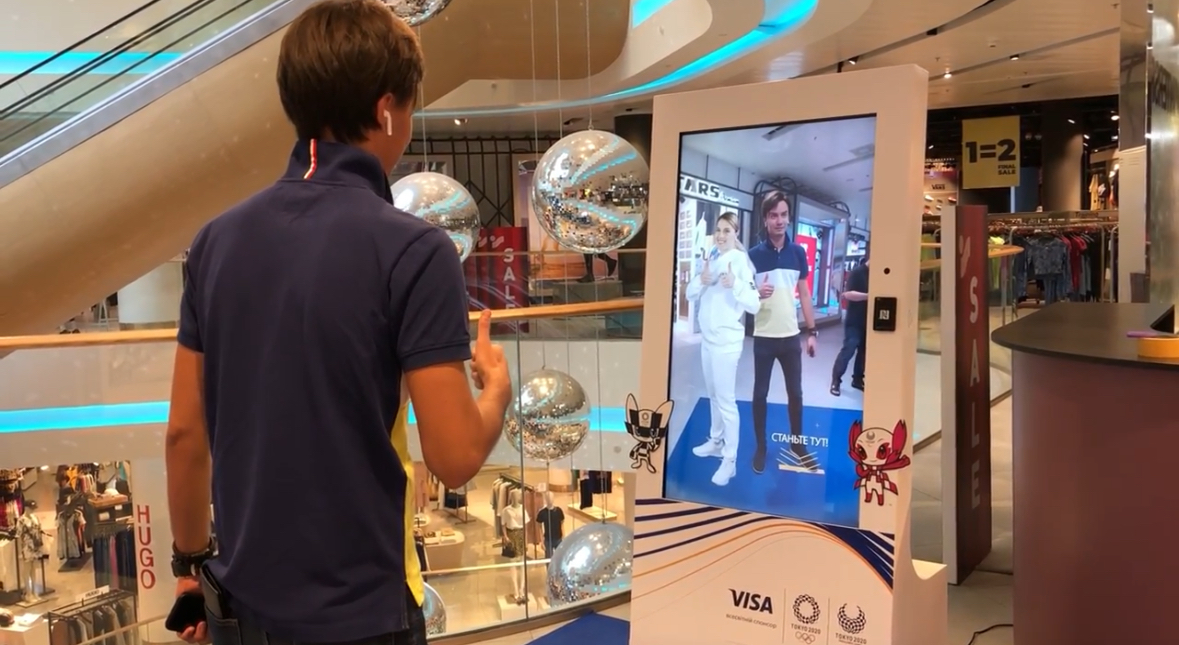
2. Olympic Games: Photos with Athletes Through AR Mirror
n 2020, an AR mirror was created for VISA and Havas Engage, allowing guests to take photos with famous athletes.
The mechanics were simple and engaging. A visitor approached the mirror, selected an athlete on the screen, and a digital character appeared beside them in the frame. Then they could take a photo and instantly share it on social media.
This is an example of how AR mirror for conferences, sports forums, or major international events helps:
- increase engagement;
- connect people with event heroes;
- generate branded user-generated content;
- expand reach through sharing.
Such AR mirrors are especially effective where emotion and interaction with brand ambassadors matter.
3. River Mall for Valentine’s Day: Personalized Postcards Through AR Mirror
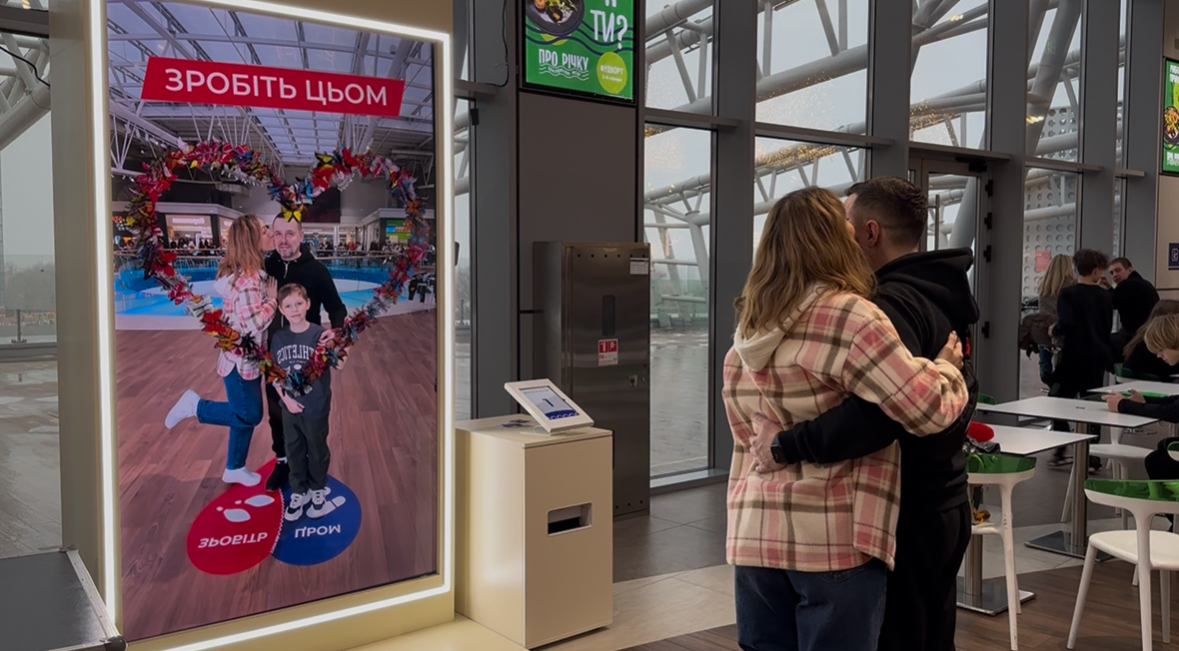
Another modern case was the use of AR mirrors for River Mall in 2026 for Valentine’s Day.
The task was to create a romantic activation for mall visitors that combined entertainment, photo experience, and personalization.
An AR mirror was installed that allowed guests to:
- take photos with themed AR effects;
- add romantic masks;
- instantly receive a printed postcard;
- send the photo to their email.
A video intro and branded illuminated display were also created for the installation.
The result was hundreds of daily interactions and more than a thousand personalized postcards. This proves that AR mirror for events works not only at business events but also in retail environments.
4. L’Oréal Paris: AR Mirror for Exhibitions and Beauty Events
Global brand L’Oréal Paris actively uses augmented reality mirrors at exhibitions and presentations.
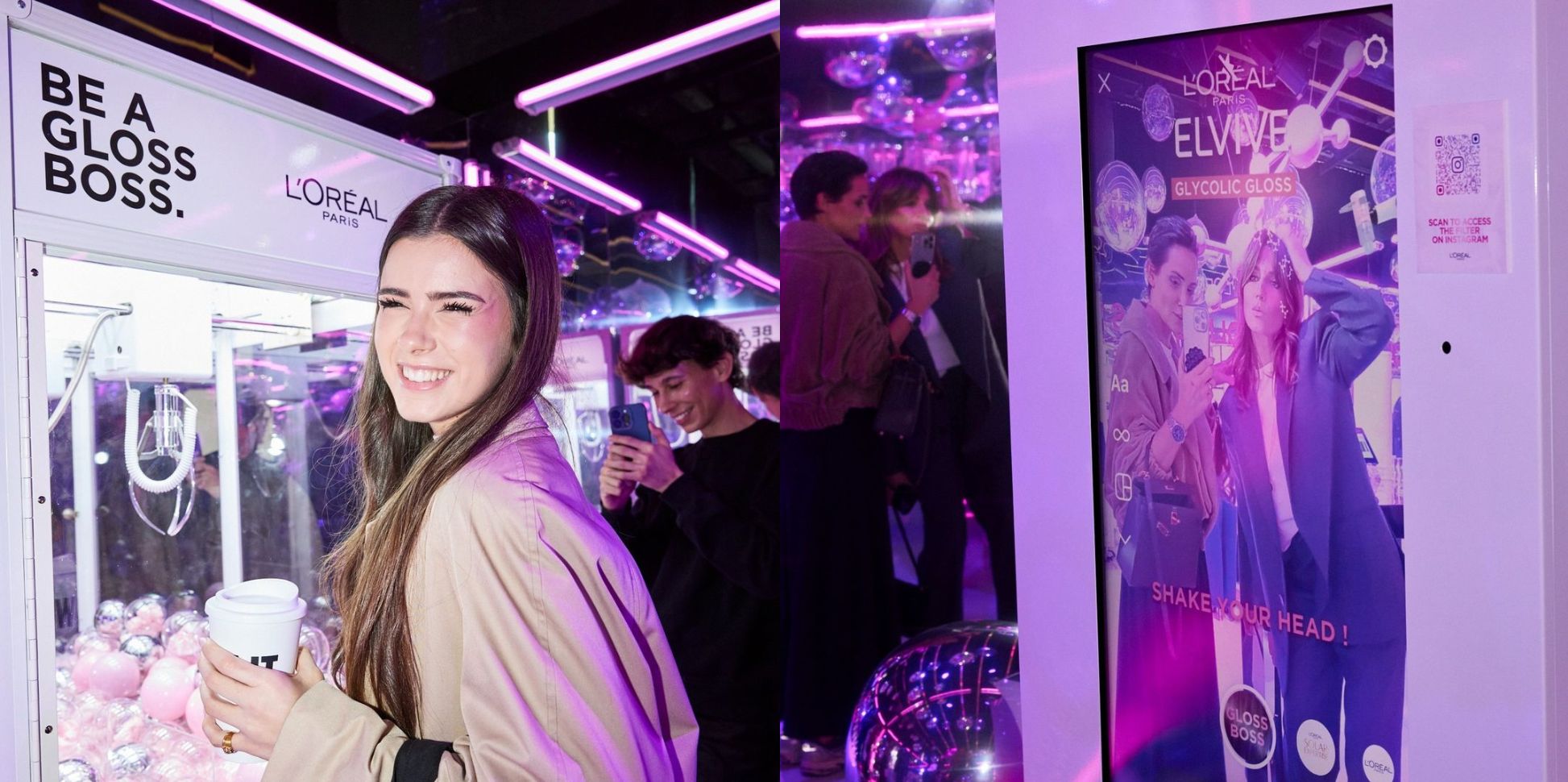
At The Power of Science Station event in Paris, the brand transformed a metro platform and a five-car train into a multimedia space, with each car dedicated to a different product.
For the Glycolic Gloss presentation, they installed an AR mirror for exhibitions that allowed visitors to see the virtual effect of the product on themselves in real time.
Main results:
- 9 times higher engagement than traditional video advertising;
- 3 times more traffic;
- longer interaction time with the brand;
- strong wow effect.
This is an excellent example of how AR mirror for exhibitions transforms a passive booth into an interactive experience.
5. McDonald’s Corporate Event: Gamified AR Mirror
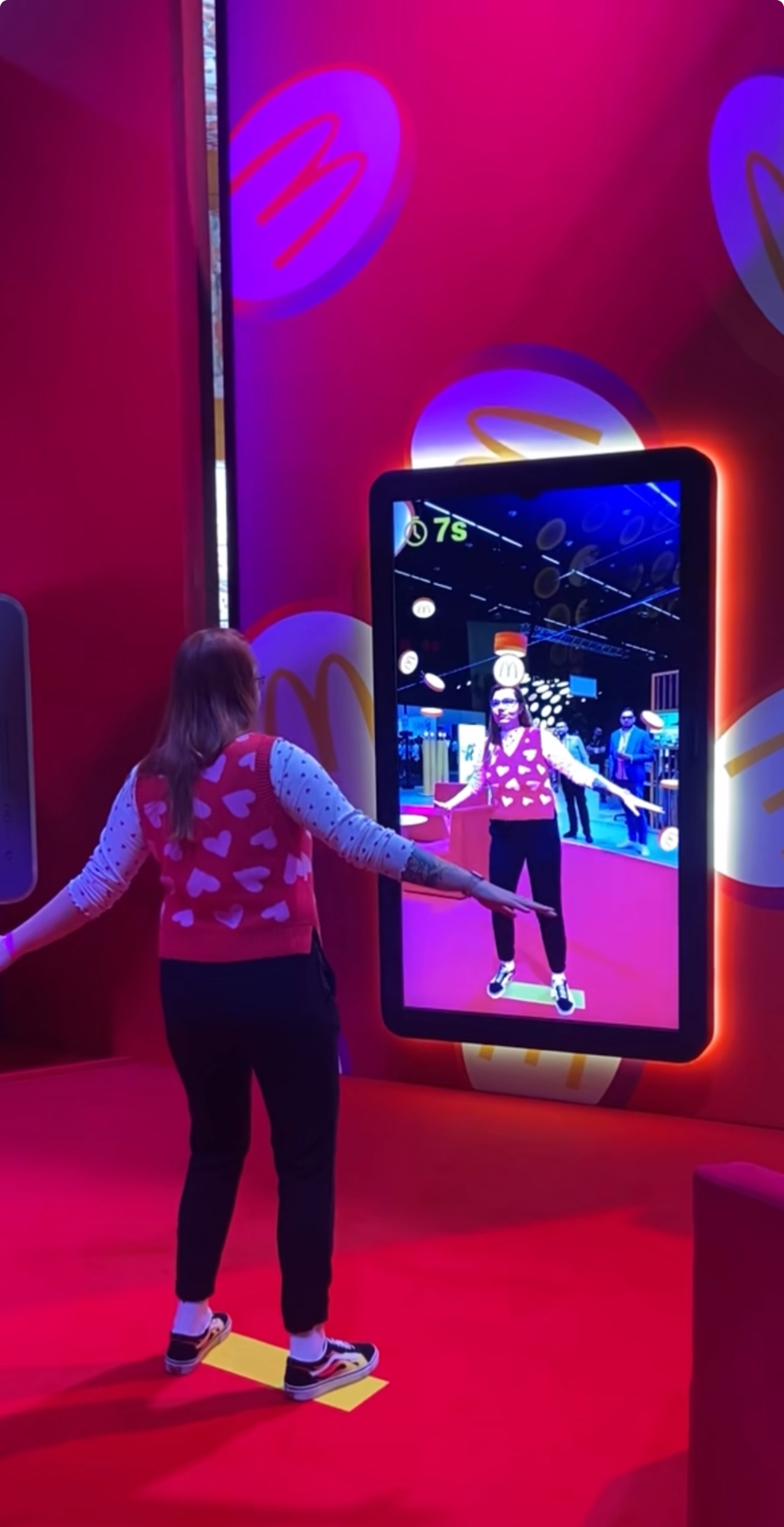
McDonald’s used an AR mirror at a corporate event in the form of a game.
On a large screen, an AR experience was launched where participants had to balance virtual coins on their heads for as long as possible. The system tracked body movements, simulated object physics, and kept score.
This activity became one of the most popular zones at the event. People lined up to beat their friends’ records.
Why it worked:
- simple mechanics;
- competitive element;
- funny content;
- group participation;
- emotional brand connection.
This format is ideal for corporate events, festivals, conferences, and promotional activations.
Where AR Mirror Works Best for Events
Today, AR mirror for events can be integrated into almost any event format:
Conferences
- interactive welcome zone
- lead generation
- branded photo content
Exhibitions
- product demonstrations
- booth traffic attraction
- new product launches
Fashion Events
- digital try-ons
- AR looks
- stylish postcards
Shopping Malls & Retail
- seasonal activations
- holiday photo zones
- contests and promotions
Corporate Events
- gamification
- team activities
- branded entertainment
Why Brands Choose AR Mirrors
AR mirror is a universal tool that combines technology, marketing, and entertainment. It works simultaneously as:
- photo zone;
- digital installation;
- lead generation point;
- wow element;
- content distribution channel;
- audience engagement tool.
Unlike traditional stands, AR mirror for events creates an experience people want to photograph, film, and post online.
Global and Ukrainian case studies prove that AR mirror is no longer futuristic, it is a real working tool for brands. From Ukrainian Fashion Week to L’Oréal and McDonald’s, AR mirrors transform events, add interactivity, and create unforgettable эмоції.
If you need a wow effect, lines at your booth, user-generated content, and strong brand communication, AR mirror for events is one of the best solutions.
That is why smart augmented reality mirrors are already shaping the future of event marketing today.