




In the previous article, we explored how AR and VR expand access to heritage and change the way people interact with it. The next step is to determine which solution meets your institution’s specific objective.
Below, we discuss three formats that the ADVIN team has already implemented in cultural projects: AR memorials, WebAR exhibitions and VR 360 tours.
AR Memorials: When It Is Important to Tell the Story Where the Events Took Place
At a place of remembrance, an important event is often commemorated only by a plaque with a date and a brief description. An AR mirror for a museum or a place of remembrance supplements this information with archival materials and stories about those who took part in the events.
- At the location, visitors can view archival photos and videos and discover the stories of people who took part in the events.
- Viewing photos and videos can be complemented by interactive formats: gamification and quests to engage visitors more actively.
- A museum or community gains a digital memorial to preserve memory and introduce different generations to the history of the place.
When addressing the subject of war, verified materials and respect for the people whose stories are presented in the memorial are essential.
Case “Places of Memory”
Task. Preserve the memory of the defence of the Kyiv region and present the stories of heroes and events in a form that different generations can understand.
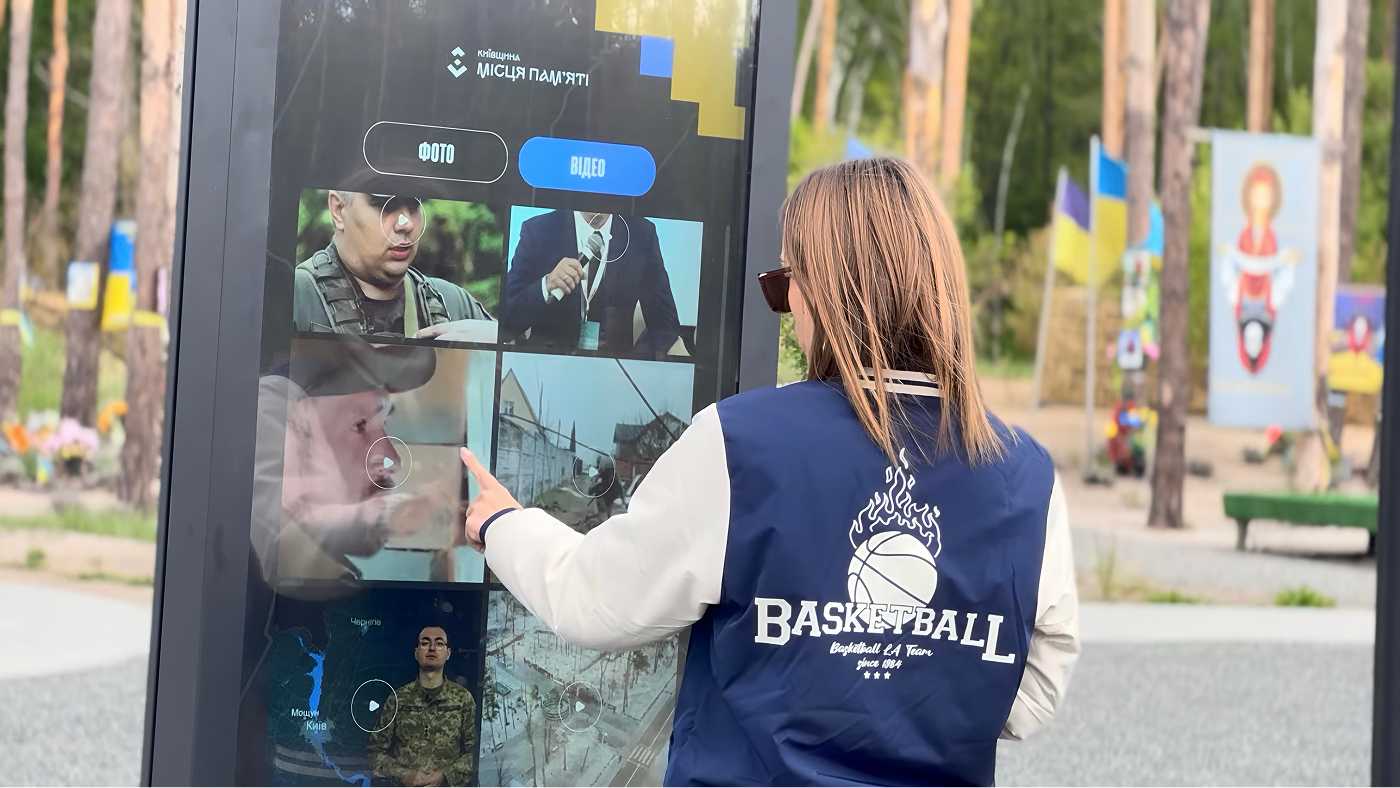
Solution. The ADVIN team implemented a series of interactive AR mirrors at key sites connected with the defence of the Kyiv region — in Borodianka, Moshchun and at the Romanivskyi Bridge. In total, the project’s AR mirrors have been installed in 6 cities.
The screens display archival photographs, video materials and stories of heroes. Visitors learn about the events surrounding the defence of the region through documentary materials and interactive scenarios.
The “Battle of Moshchun” quest was developed for the location in Moshchun. Participants answer questions about history, select answers from the available options and test their knowledge of the defence of the village.
WebAR for Museum Exhibitions: When an Exhibit Needs to Be Viewed Up Close
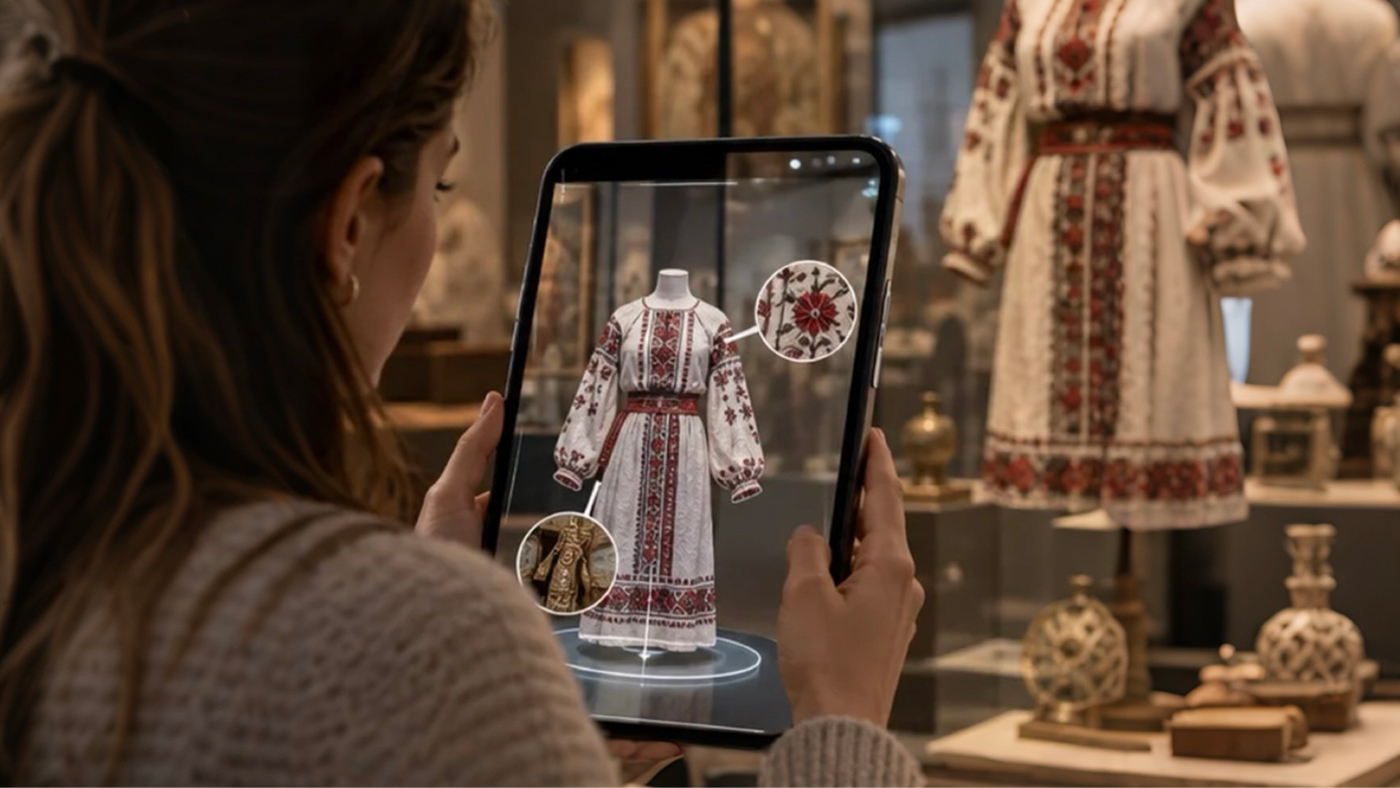
A display case does not always allow visitors to examine the shape, decoration and individual details of a museum object thoroughly. WebAR for museums allows visitors to examine a digital copy of an exhibit up close and see its distinctive features more clearly.
-
- An exhibit can be opened in augmented reality on a visitor’s own smartphone without installing an app.
- A 3D model can be viewed from different angles, while animation makes it possible to see the object in motion.
- The museum expands the ways its collection can be viewed and reveals details that are difficult to see through a display case.
Case “AR Exhibits at the Hutsul Svitlytsia”
Task. Present vintage Hutsul clothing in augmented reality so that museum guests can examine the exhibits in detail.
Solution. ADVIN specialists created a WebAR exhibition featuring three-dimensional models and animation of vintage Hutsul clothing. Museum exhibits can be opened in a smartphone browser and viewed in augmented reality.
On the screen, visitors can examine the shape and decoration of the clothing from different angles and see animated models. There is no need to install a separate app to view them. The project helped increase the number of museum visitors.
VR 360 Tours and Galleries: When a Space Cannot Be Visited in Person
A historic space may be destroyed, changed beyond recognition or located far from its audience. A VR tour of a museum or a historic city makes it possible to see these spaces from anywhere in the world.
- A 360° panoramic view allows viewers to explore the space around them, while audio accompaniment explains the historical context.
- A virtual museum tour or a VR 360 gallery opens the collection to people who cannot visit.
- Archival materials can be used to recreate lost architecture and show a city during a particular historical period.
Case “VR Tour of Krakow in 1650”
Task. Create a VR tour that recreates seventeenth-century Krakow and conveys the atmosphere of the historic city through its architecture and urban life.
Solution. The team created a three-dimensional reconstruction of Krakow’s buildings and locations as they were in 1650, using archival materials and engravings. During the virtual tour of the historic city, visitors can explore its architecture and see characters representing urban life. The tour is accompanied by audio narration with historical information.
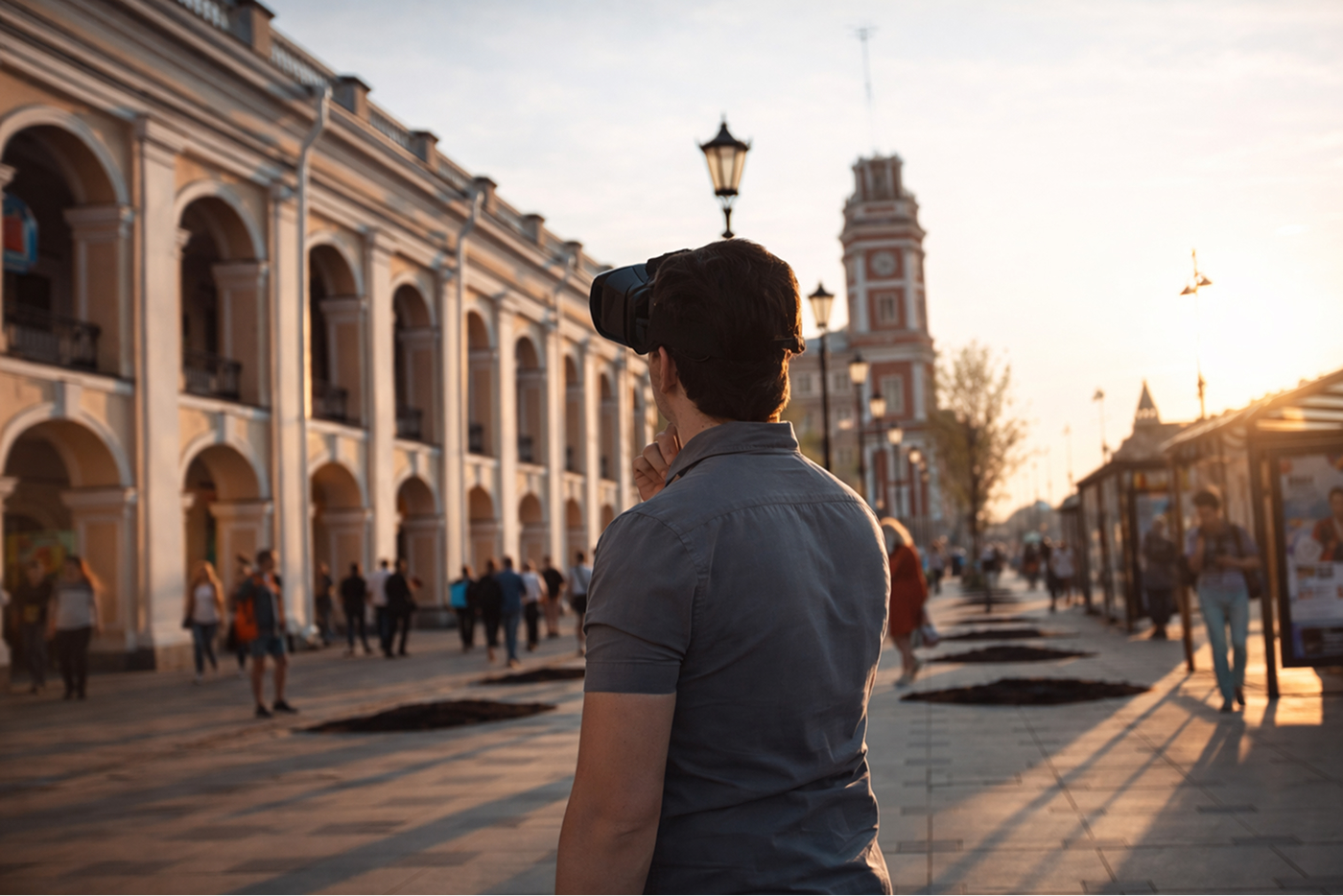
How to Choose a Format for Your Institution
An AR memorial is suitable when it is important to tell a story where it happened: archival photos, videos and people’s stories appear at the location itself, and the memory of the event is passed on to different generations.
WebAR helps when an exhibit in a gallery needs to be shown in greater detail than a display case allows: it “comes to life” on the visitor’s phone without altering the original and can be examined from all sides.
VR 360 is appropriate when an object has been destroyed, is inaccessible or its audience is far away: the tour makes it accessible from anywhere in the world and recreates lost buildings using archival materials.
It all comes down to the question of where the visitor encounters history: at the site of an event, beside an exhibit or beyond the museum.
Not sure which solution meets your needs? The ADVIN team will help determine the format for your museum or cultural project.